
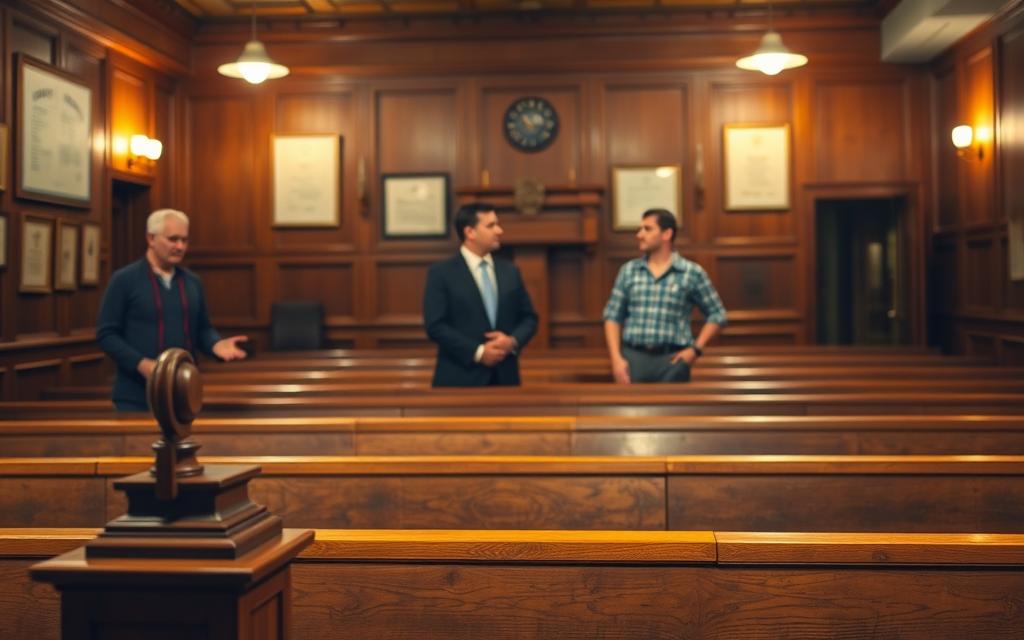
Ever wondered how to fix a legal problem without spending a lot? Small claims court might be what you need.
Going to small claims court can seem scary. But knowing your rights makes it easier. The rules are made for people like you to get justice for small money issues.
Small claims court is easy and helps solve problems fast. It’s good for tenants, landlords, shoppers, and small business owners. Knowing your rights helps you get a fair deal.
Key Takeaways
- Small claims court provides an affordable legal option for resolving disputes
- Most cases do not require legal representation
- Claim limits vary by jurisdiction
- Self-representation is common and encouraged
- Mediation can be an alternative to traditional court proceedings
- Documentation and evidence are key for success
- Understanding procedural rules boosts your chances of winning
Understanding Small Claims Court
Small claims court is a simple way to solve money problems. It’s important to know how it works to win your case.
These courts help people solve money issues easily. They are less complicated and cheaper than regular courts. The main goal is to make it easy to fix money problems.
Defining Small Claims Court
Small claims courts deal with money issues. They handle:
- Property damage claims
- Contract disputes
- Unpaid debts
- Minor financial disagreements
Court Limitations and Jurisdiction
Knowing what small claims court can do is key. There are limits on how much money you can claim:
- Claims can be up to $2,500 to $15,000
- Claims over the limit need regular court
- Time limits are 3-6 years
Every state has its own rules for small claims court. It’s important to check your local rules before suing.
Key Procedural Characteristics
Small claims courts are different from regular courts. They are more relaxed. The process includes:
- Easier filing
- Quicker solutions
- Lower legal costs
- Less strict rules for evidence
Knowing these basics helps you use small claims court to solve your money problems.
Eligibility for Small Claims Court
Understanding small claims court rules is key. Whether you’re defending yourself or filing a claim, knowing the basics is important.
Small claims courts help solve disputes in a simple way. They have rules and limits. People and businesses can use them for financial and civil issues.
Who Can File a Claim?
To file a claim, you need to meet some criteria:
- Be at least 18 years old or legally emancipated
- Have a real civil dispute within the court’s money limits
- Have the right papers to support your claim
Amount Limits and Jurisdiction
Knowing the money limits is part of understanding small claims court. Here’s a quick look at claim limits:
| Claimant Type | Maximum Claim Amount | Annual Filing Limit |
|---|---|---|
| Individual | $10,000 | Two claims over $2,500 |
| Legal Entity | $5,000 | Two claims over $2,500 |
Types of Claims Allowed
Filing fees change based on the claim amount. Common claims include:
- Debt collection
- Property damage
- Contract disputes
- Personal property recovery
Important note: Courts don’t handle fraud, intentional harm, or damages over their limits.
Preparing for Your Small Claims Case
Going to small claims court needs careful planning. Knowing what to expect can help a lot. A strong case needs good documents and clear evidence.
- Gather all important documents
- Put your evidence in order
- Learn about local court rules
- Write a clear claim statement
Collecting Evidence and Documentation
Good evidence is key. Get all relevant documents like:
- Contracts
- Receipts
- Photographs
- Letters
- Repair estimates
Understanding the Rules and Procedures
Every state has its own small claims court rules. Money limits vary from $2,500 to $25,000. Most places let you represent yourself, making things simpler for common disputes.
Filing Your Claim: Step-by-Step Guide
Preparing for small claims court means filing your claim step by step:
- Go to your local courthouse or check their website
- Fill out the claim form
- Pay the filing fee
- Notify the defendant
- Get your evidence ready
Tip: Many win because the other side doesn’t show up. Make sure to follow all steps carefully to increase your chances.
Your Rights as a Plaintiff
Going to small claims court can be tough. But knowing your rights helps you do it well. You have important protections to make sure the process is fair.

As a plaintiff, you must prove your case. You need to gather and show strong evidence. Your rights include:
- The right to represent yourself without a lawyer
- The chance to share your evidence and arguments fully
- The right to appeal if you don’t agree with the first decision
Right to Represent Yourself
Small claims court is made for people like you. You can go there alone. Many people win by being well-prepared and clear in their arguments.
Right to Present Evidence
You need strong evidence to prove your case. Get important papers like contracts and photos. The judge will look at your evidence to decide.
Right to Appeal the Court’s Decision
If you don’t like the first decision, you can appeal. You must file an appeal within 14 days. Appeals can be hard and might cost more money.
Your Rights as a Defendant
Facing a small claims court case can be scary. But, defendants have rights that help protect them. Knowing these rights is key when facing legal challenges in small claims court. This includes disputes with tenants or businesses.
When you’re in a small claims court case, you have important protections:
- Right to receive proper legal notice of the claim
- Ability to file a counterclaim
- Option to present a robust defense
Receiving Proper Notice
Every defendant has the right to know about the lawsuit. In small claims court, getting the right notice is key. Wrong notice can make the whole case invalid.
Counterclaim Opportunities
Defendants can protect themselves by filing a counterclaim. This lets you ask for money from the plaintiff too. It’s a smart way to fight back.
| Type of Claim | Typical Filing Requirements | Potential Outcomes |
|---|---|---|
| Tenant Dispute | Written documentation of damages | Potential rent recovery or repair costs |
| Business Dispute | Contract evidence or financial records | Monetary compensation or contract enforcement |
Defending Your Claim
Strong evidence is key to a good defense in small claims court. You can use witness statements, documents, and expert opinions. You need strong arguments to prove your side.
The Role of the Judge
Small claims court judges are key in solving disputes fairly and quickly. It’s important for both sides to know what the judge does.
Judges in small claims court do things differently than regular court judges. They lead the case, ask tough questions, and decide based on what’s shown.
Judicial Responsibilities and Decision-Making
The judge’s main jobs are:
- Keeping the court in order
- Looking at evidence fairly
- Letting both sides speak
- Deciding within the court’s limits
How Judges Reach Decisions
Judges look at many things when deciding a case:
- How clear and true the evidence is
- What witnesses say
- Any papers that back up claims
- If the arguments fit the case
Understanding Judicial Discretion
Judges use their own judgment in each case. How long does a small claims case take can change based on the judge and the case.
Most small claims cases get solved in 30-90 days. Judges help make this happen by asking direct questions and keeping things moving.
Mediation and Settlement Options
Going to small claims court can be tough. But, mediation is a great way to solve problems without going to court. It’s faster and cheaper.
Mediation is a private talk with a neutral person. It helps you find a way to settle your dispute. Knowing about mediation can change how you plan your case.
Understanding the Mediation Process
In mediation, you talk about your problem with a mediator. They help you find a solution. It’s a safer choice than going to court.
- Mediation sessions last 2-3 hours
- Costs are split between both sides
- It’s a private process
- No court record is made
Benefits of Settling Before Trial
Lawyers are expensive. Mediation is cheaper. It has many benefits:
- It saves money
- It’s faster
- You have more control
- It’s less stressful
When to Consider Mediation
Mediation is best when both sides are willing to talk and compromise. Courts might suggest or even need mediation. If you agree on a solution, it’s legally binding. This can save time and money.
But, not every case is right for mediation. Some problems are too complex or unfair. Then, you might need to go to court.
Legal Representation in Small Claims Court
Going to small claims court can be tough. You might wonder if you need a lawyer. Most people choose to go it alone. But knowing your rights is key to winning.

Legal help in small claims court changes a lot from place to place. Knowing your rights is important for making good choices about legal help.
Can You Hire an Attorney?
In most places, small claims courts have rules about lawyers. They usually don’t want lawyers to get involved. Here are some things to think about:
- Many places don’t let lawyers help you
- Some courts let you talk to a lawyer before the hearing
- Most people choose to do it themselves
The Limits of Legal Advice
Legal advice in small claims court has its limits. Lawyers can give tips, but they can’t really help in court. Getting ready is the most important thing.
Pros and Cons of Legal Representation
| Pros | Cons |
|---|---|
| Professional legal advice | More legal costs |
| Help with planning your case | Can’t do much in court |
| Understanding legal stuff | Some courts might not let you |
When you’re dealing with small claims court, think about your situation carefully. Talking to a lawyer can help a lot. But you might not need them to represent you fully.
The Hearing Process
Going to small claims court can seem scary. But knowing the steps helps you use your legal rights well. The small claims court rules make it easier to solve disputes.
What to Expect During the Hearing
Small claims court hearings have many cases on the same day. You might have to wait, but get there on time. Courtrooms have rules that can help you win your case.
- Arrive at least 30 minutes before your scheduled time
- Bring all relevant documentation and evidence
- Dress professionally and respectfully
- Silence electronic devices
How to Present Your Case
It’s key to present your case well in small claims court. Organize your evidence in order and explain your claim simply. Stick to the facts and avoid emotional arguments.
- Introduce yourself clearly to the judge
- Explain your claim in a direct, concise manner
- Present evidence systematically
- Answer questions directly and respectfully
Tips for Effective Communication
Good communication is very important in your hearing. Always call the judge “Your Honor” and speak clearly. Listen well to questions and answer them directly.
Remember, you want to make a strong, fact-based argument. This shows why you should win your case.
After the Hearing: Your Next Steps
Going through a small claims court hearing can be tough. Whether you won or lost, knowing what to do next is important. The court’s decision is the final say in your case.

Understanding the Judgment
When you defend yourself in small claims court, the judgment is a court order. It tells you what the legal outcome is. Important things to look at include:
- The exact amount you got
- How and when to pay
- When you must follow the order
Collecting Your Judgment
Even if you win, getting paid right away isn’t always easy. You’ll need to take extra steps to get your money:
- Ask for a Writ of Execution from the court
- Try to take money from the defendant’s wages
- Put a lien on their property
- Do a debtor’s examination
Options If You Lose
Even if you lose, you’re not out of options. You can:
- File an appeal within the time allowed
- Talk about paying in installments
- Get legal advice to see what you can do
Remember, the court’s decision is final. If you won, keep pushing to get your money. If you lost, it’s key to know what you must do and what might happen if you don’t pay.
Common Mistakes to Avoid
Going to small claims court can be tough. Knowing what to avoid is key to winning your case. Many people make mistakes that hurt their chances.
Inadequate Preparation Strategies
Being well-prepared is essential for success in small claims court. Here are important steps to take:
- Gather all the documents you need
- Put your evidence in order
- Make your presentation clear and short
- Know the legal points you can make
Critical Deadline Management
Don’t ignore court deadlines. The rules for filing fees and time limits are strict. Missing important dates can lead to:
- Your case being thrown out
- A default judgment against you
- Loss of your filing fees
- Possible legal penalties
Evidence and Documentation Challenges
Not having good evidence weakens your case. Bad documentation can ruin a strong claim. Make sure you have:
- Contracts and agreements
- Receipts and financial records
- Photos or videos
- Statements from witnesses
Winning in small claims court means presenting strong evidence. Legal arguments are different from personal excuses. Stick to facts and stay professional.
Additional Resources
Going to small claims court can be tough. But, there are many resources to help you. You can find support whether you’re on your own or need help with appeals.
First, you need to know where to find the right tools. Court websites are full of helpful information. They make legal stuff easier to understand.
Where to Find Legal Assistance
- Local Legal Aid Organizations
- Pro Bono Legal Clinics
- Court Self-Help Centers
- State Bar Association Resources
Online Tools and Templates
Online tools can make things easier. Many courts have:
- Downloadable court forms
- Online filing systems
- Interactive document guides
- Fee calculators
State-Specific Small Claims Court Resources
Rules for small claims court change by state. Each state has its own rules for court procedures, fees, and claim limits.
Look for state court websites, local clerk offices, and legal help platforms. They offer specific info for your state. This helps if you’re representing yourself in court.
Conclusion: Knowing Your Rights
Small claims court is a great way to solve problems quickly. It’s good for both tenant-landlord issues and small damages. Knowing how it works is key.
Getting ready for your case is important. When looking at your legal options, make sure you have all your papers ready. Most cases get solved in a few weeks, with courts handling claims up to $10,000.
Knowing what might happen is also important. If your case gets dismissed, it’s not the end. Courts aim to solve things fast and fairly. Being well-prepared and professional can really help your case.
The small claims process lets people fight for what’s right. By being informed and organized, you can use it to solve problems and protect your rights. The main goal is to find a fair solution, not just win.



+ There are no comments
Add yours